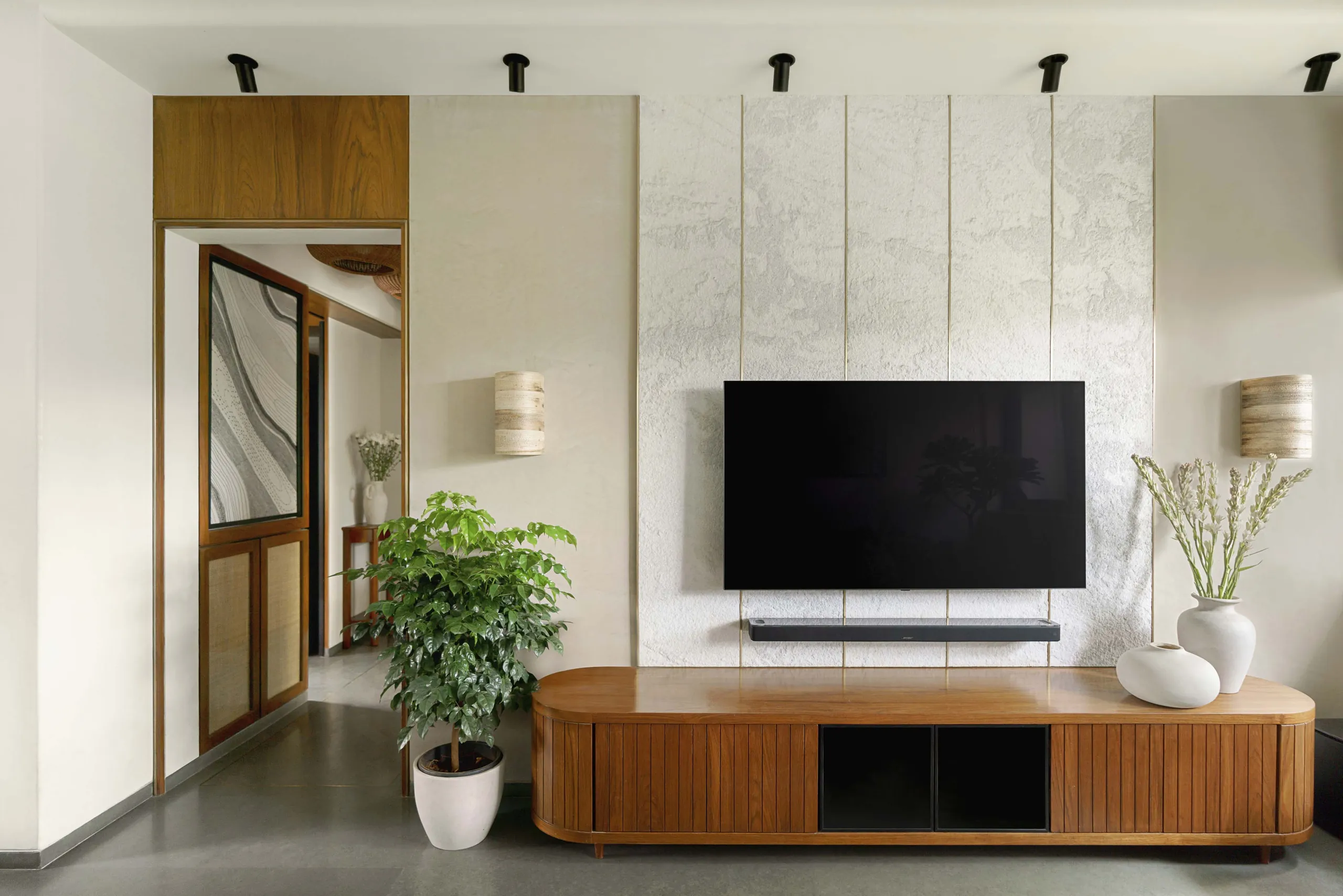
The Seed sits in one of South Mumbai’s heritage neighbourhoods, off Laburnum Road, close to Babulnath. The apartment looks out onto mango and jackfruit trees. The family who live here are modern Kutchhi Gujaratis. They asked for a home with old-world charm that was timeless rather than fashionable, built from local materials, and fully equipped for modern life and future technology.
“My aim was to reflect as much of this greenery into the home,” says Maitri, who led the project.
the brief, the decision and daily use
The family wanted contemporary living with the character of Kutch craft and familiar materials. Hand-shaped niches, repurposed teak and tree-facing window seats translate that brief into rooms used every day. The result ties a whole-home renovation to the family’s identity and the apartment’s surroundings.
the brief
- Contemporary, but carrying the warmth and memory of an older way of building.
- Local materials and techniques wherever possible.
- Space for a three-bedroom family, including the family dog.
- Future-ready services hidden behind a calm, handmade surface.
inspiration from the kutchi bhunga
The design draws on the bhunga, the traditional circular mud house of Kutch. Bhungas have thick, hand-finished walls, rounded edges, built-in niches and inlaid decoration. They’re cool, soft and personal. We translated those qualities into a city apartment:
- Hand-applied lime plaster throughout. It has a soft texture and forms part of the chosen material system.
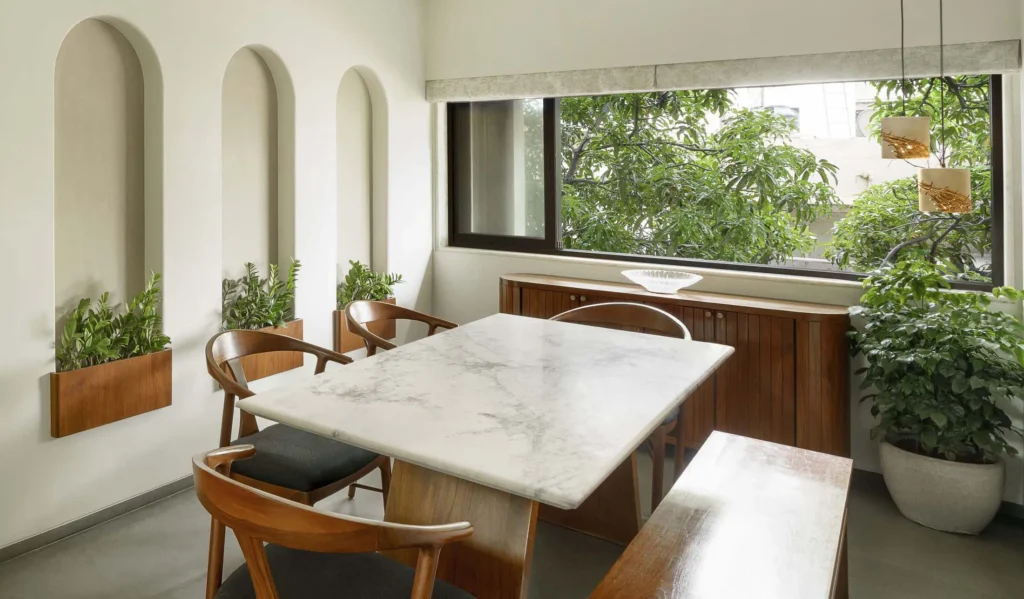
- Hand-shaped niches set into the walls, both for storage and for display.
- Rounded edges on walls, openings and joinery, so the home feels softer to move through.
- Subtle inlay work in timber and stone.
We wrote about this process in more depth in bringing Kutch craft into a Mumbai home, and about the material itself in our guide to lime plaster walls.
materials from close to home
| Material | Where |
|---|---|
| Bhura grey limestone | Living spaces |
| Chocolate and olive limestone | Bathrooms |
| White Indian marbles in varied finishes | Counters and surfaces |
| Hand-applied lime plaster | Walls throughout |
| Repurposed Burma teak, finished in linseed oil | Doors, frames, joinery |
| Hand-woven rattan and linen inlays | Joinery and shutters |
| Solid brass inlays | Details and hardware |
Reusing the existing Burma teak gives the home depth and history. It also keeps good wood out of the waste stream.
craft in the details
Local craft is part of the architecture, not added afterwards:
- Hand-embroidered Kutchhi morii art from the family’s own tradition.
- Hand-woven rattan shutters on wardrobes.
- Handmade decorative lights.
- An arched sitting space in the entrance passage.
- A custom dog bed built into a wall niche.
- An arched mirror in the smallest bedroom that gives a sense of greater depth.
letting the trees in
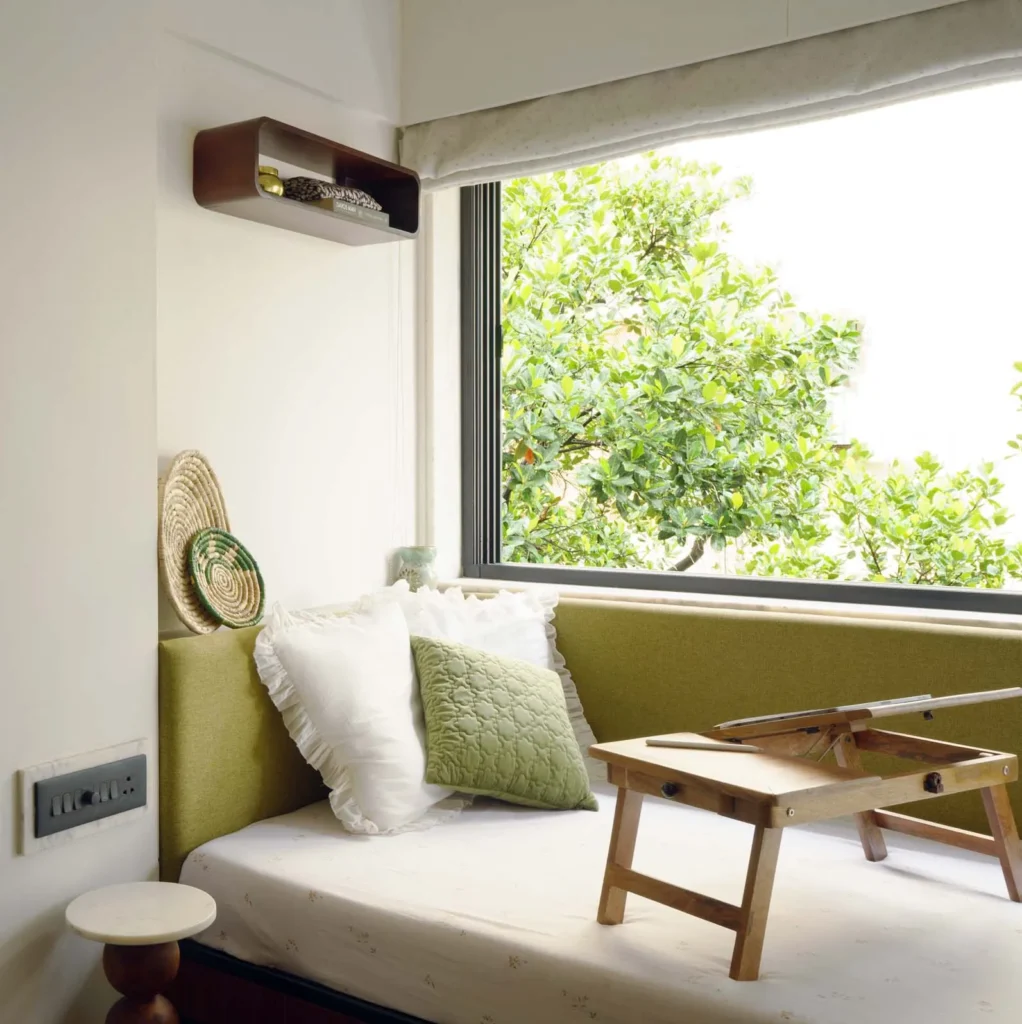
The apartment’s best feature is outside it. Wide windows, low sills and window seats frame the canopy so it reads as part of each room. Cross-ventilation through the plan keeps the home comfortable for much of the year with less reliance on air-conditioning.
why this matters for older south mumbai homes
Homes in Gamdevi, Malabar Hill, Walkeshwar and the streets around them often sit in older buildings with character worth keeping. Renovating them well means respecting what’s there and using materials that suit the climate. Equally, nothing should be faked. The Seed is our clearest example of that approach. Read more about how we work on heritage-sensitive homes.
Related: heritage homes · apartment renovation · where we work
The Seed was featured by India Design World. Photographs by Vikram Bawa.
planning a family-home renovation
Explore our apartment renovation service. When you tell us about your project, include its location, approximate area, scope and current stage, together with your preferred completion period.