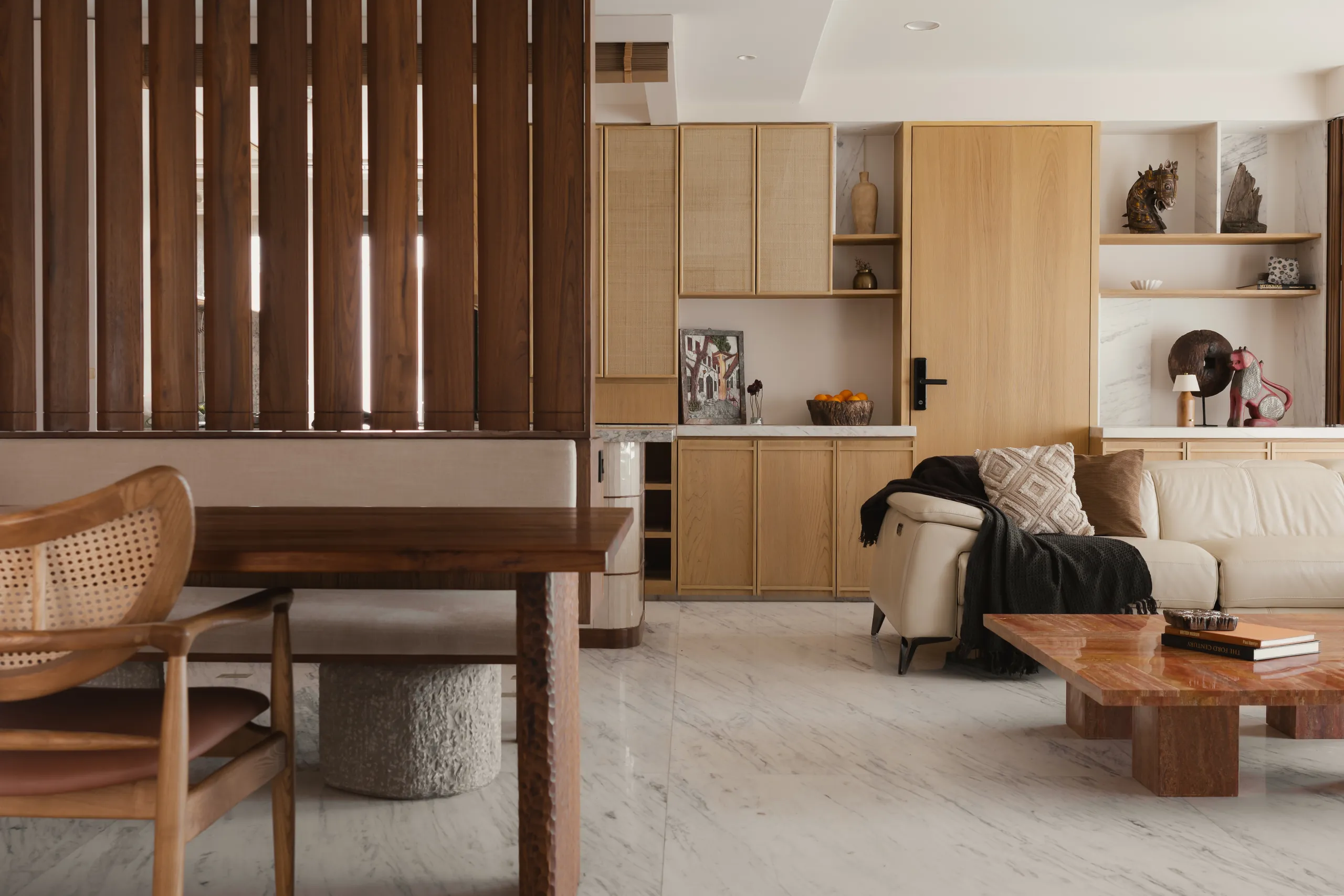
“What will it cost?” is the first question almost everyone asks, and the hardest to answer in a sentence. The honest answer is that two flats of the same size can differ in cost by three or four times, depending on a handful of decisions. This guide explains those decisions, so you can set a realistic budget before you speak to anyone.
two separate costs: the fee and the build
People often blur these together:
- The design fee pays for the architect or interior designer’s time: concept, drawings, specifications, coordination and site supervision.
- The project cost pays for everything that gets built and bought: civil work, electrical and plumbing, carpentry, stone, paint, lighting, furniture, fittings and appliances.
The project cost is usually by far the larger number. A good designer often saves more on the project cost, through accurate drawings, fewer site mistakes and better buying, than their fee costs you.
how designers in mumbai charge
You’ll come across three common models:
- Percentage of project cost. The fee is a percentage of what’s built. It’s simple, and it scales with complexity, but it ties the fee to how much you spend.
- Fee per square foot. A rate multiplied by the carpet or built-up area. It’s predictable from day one, but treats a plain bedroom and a complex kitchen as equal.
- Fixed (lump-sum) fee. Agreed for a defined scope. It’s clear, as long as the scope is properly written down.
Some firms also offer design-and-build or turnkey packages, where the fee is folded into the project cost. That’s convenient, but it’s harder to see what you’re paying for design versus materials and margins.
Whatever the model, ask exactly what’s included: number of design options, revisions, drawings, site visits, furniture design, styling, and travel for projects outside the city.
what drives the project cost
Broadly, from biggest to smallest effect:
- How much civil and services work is needed. Replacing old plumbing and wiring, waterproofing and moving walls in an older building can be a large share of the budget before any finish is visible. See renovating an old Mumbai apartment.
- Kitchens and bathrooms. These are the most expensive rooms per square foot: stone, tiles, fittings, appliances and waterproofing.
- Custom joinery. Wardrobes, kitchens and storage. Solid timber and veneers cost more than laminates, and complex detailing costs more than simple.
- Stone and flooring. Indian marbles like Banswara and Kota stone are often far better value than imported stone, and age just as well.
- Loose furniture, lighting and soft furnishings. These can range from modest to unlimited.
- Building constraints. Restricted working hours, no lift access for materials, or long debris routes all add time, and time costs money.
rough budget bands
It helps to decide which level of work you’re planning before you think about rates. In Mumbai, each step up the table below typically adds significantly to the cost per square foot. Ask any designer you meet for their current indicative range for each level. A good one will give you an honest band at the first meeting.
| Level of work | What it usually means | Relative cost |
|---|---|---|
| Refresh | Paint, lighting, some joinery, minimal civil work | Lowest |
| Full interior | New joinery throughout, kitchen and bathrooms redone, new lighting | Moderate |
| Full renovation of an older flat | Above, plus new plumbing, wiring, waterproofing and layout changes | Higher: services and civil work add a lot before anything is visible |
| High-specification | Extensive custom work, premium stone, solid timber, specialist finishes | Highest |
where to spend and where to save
From our own projects:
- Spend on what you touch every day: kitchen worktops, door and drawer hardware, the bed, the sofa, good taps.
- Spend on the hidden parts of a renovation: plumbing, wiring and waterproofing. Fixing them later means breaking finished work.
- Concentrate expensive materials where they’re seen. In the Into the Bend office, delivered on a tight budget, marble appears only at reception, in the conference room and in the powder room. Tiles and oak laminate cover everything else.
- Choose Indian materials. Banswara marble, Kota stone and local limestones are beautiful, durable and usually better value than imports.
- Let natural materials age instead of replacing them. Lime plaster, raw brass and solid timber look better in ten years. Trend finishes often need redoing.
- Plan storage once, properly. Well-designed built-in storage replaces furniture you’d otherwise buy, and makes a small home live larger, as in Plum House.
a realistic way to set your budget
- Decide the level of work from the table, honestly.
- Ask for an indicative rate for that level, and multiply it by your carpet area.
- Add 10–15% contingency, more for older buildings.
- Add loose furniture, appliances and the design fee separately.
- Share that number with your designer at the first meeting. A good one will tell you straight away whether it’s realistic, and where to adjust.
If you’d like to talk through your own numbers, get in touch. Or see how a project runs and our home interiors service.