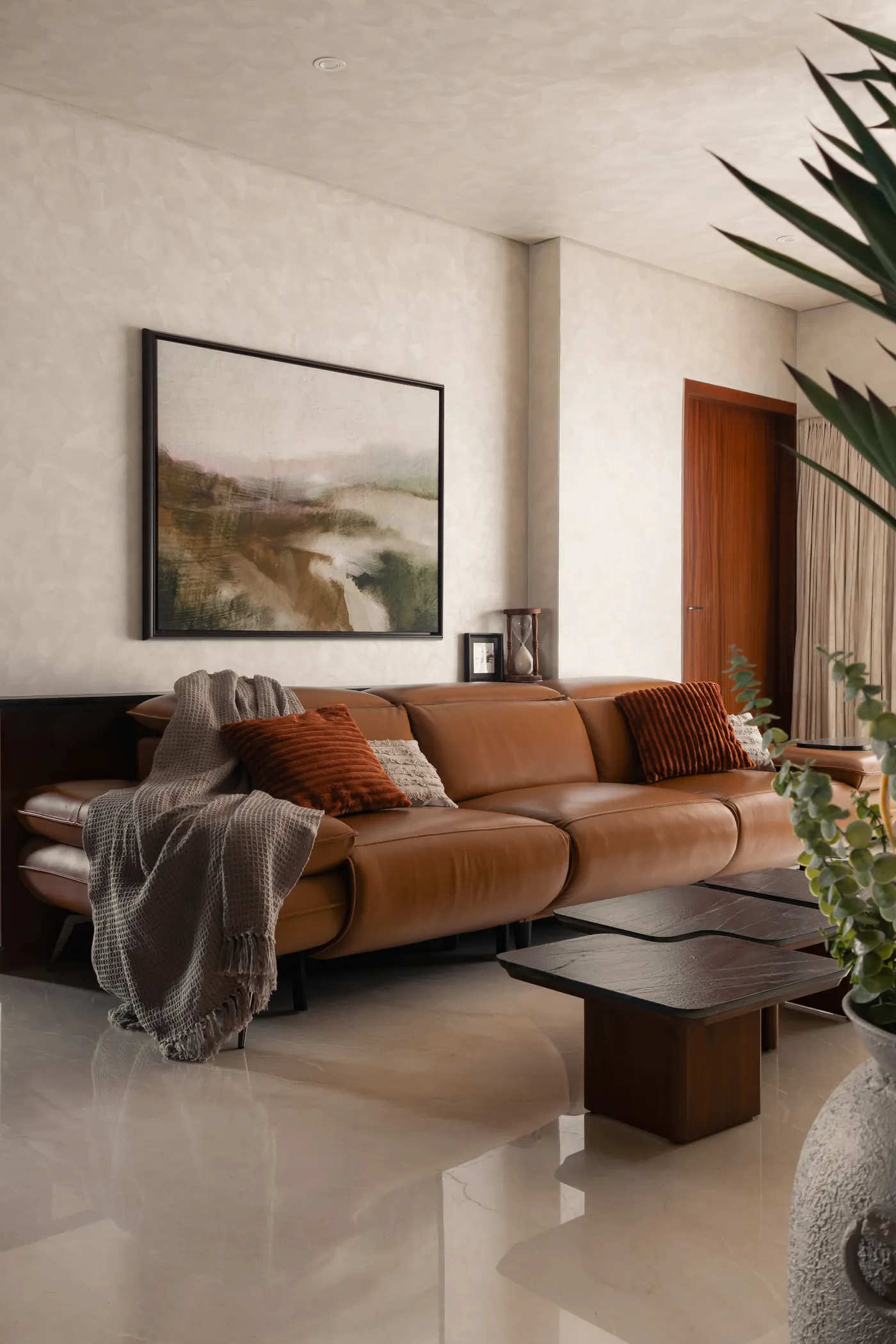
Mumbai’s older buildings are full of homes worth renovating: high ceilings, solid walls, good light and settled neighbourhoods. They also hide decades of patch repairs. Plum House, Anushri’s own home, is in a building about 50 years old, so we’ve been through this as both designers and owners.
Use this checklist before you sign off a budget. Most cost overruns in renovations come from things that could have been found in week one.
1. structure
- Look for cracks, especially diagonal ones near windows and doors, and horizontal ones along beams.
- Look for spalling: concrete flaking off to expose rusty steel, often on balconies, ceilings under bathrooms and external walls.
- Ask what previous owners changed. Removed walls, enlarged openings and enclosed balconies may affect structure or legality.
- Never remove or cut a wall, beam or column without a structural engineer’s advice and the society’s written permission. In older buildings, walls that look like partitions are sometimes doing more than you think.
If the building has a recent structural audit, ask the society for it.
2. plumbing and drainage
- Old galvanised iron (GI) pipes corrode from the inside. Low pressure, rust-coloured water or frequent leaks are signs they need replacing.
- Check where your flat connects to the building’s shafts and downpipes, and their condition.
- Moving a bathroom or kitchen is possible but expensive. Drainage needs a slope, and that usually means raising floors.
- Budget to replace all internal plumbing in a flat of this age. Doing it after new tiles are down means breaking them.
3. electrical
- Check the sanctioned load and the main incoming supply. Modern homes with several air-conditioners, an induction hob, ovens and a washer-dryer often need more than the flat was built for.
- Old aluminium or undersized wiring and missing earthing should be replaced.
- Plan every point (sockets, switches, lights, data, AC, smart-home) on drawings before the walls are closed.
4. waterproofing
Mumbai’s monsoon will find every weakness.
- Bathrooms: remove old tiles to the slab, waterproof properly, test by ponding water before new tiles go down.
- External walls: damp patches, peeling paint and salts on the inside of external walls usually mean water is getting in from outside. That’s often the society’s responsibility to fix.
- Windows: check frames, sills and the joints between frame and wall.
- Time it: major waterproofing work is best completed well before June.
5. windows, light and air
Older flats often have better proportions than new ones. Before closing anything off, look at cross-ventilation and natural light. A kitchen wall can sometimes become an open display partition that keeps light flowing, as we did with the teak cubby wall in Plum House.
6. society rules and approvals
- Ask for the society’s renovation rules in writing: permitted hours, days, noise, debris disposal, lift use and deposits.
- Apply for the NOC with drawings of what you’re changing. Many societies need to see plans for anything beyond cosmetic work.
- Restricted hours stretch the schedule. Plan for it rather than fight it.
7. redevelopment
If your building is discussing redevelopment, find out how far along it is. That decides how much you should spend, and on what. Sometimes a lighter refresh plus good furniture you can take with you is the smarter choice.
8. materials that suit an old building
Old masonry walls need to breathe. Lime plaster works with them where cement plaster and gypsum can trap moisture. See our guide to lime plaster walls. Natural stone, solid timber and brass also sit comfortably in older interiors and age alongside them.
a sensible order of work
- Survey and investigate (open up a few test areas if needed).
- Fix the structure, then waterproofing, then services.
- Then floors, joinery and finishes.
- Then furniture, lighting and styling.
what to budget for
Set aside a contingency of 15% or more for an older building. If you don’t need it, you’ll have it for the furniture. More on budgets in how much does interior design cost in Mumbai?
Planning a renovation? See our apartment renovation service, read how we handle heritage homes, or get in touch.