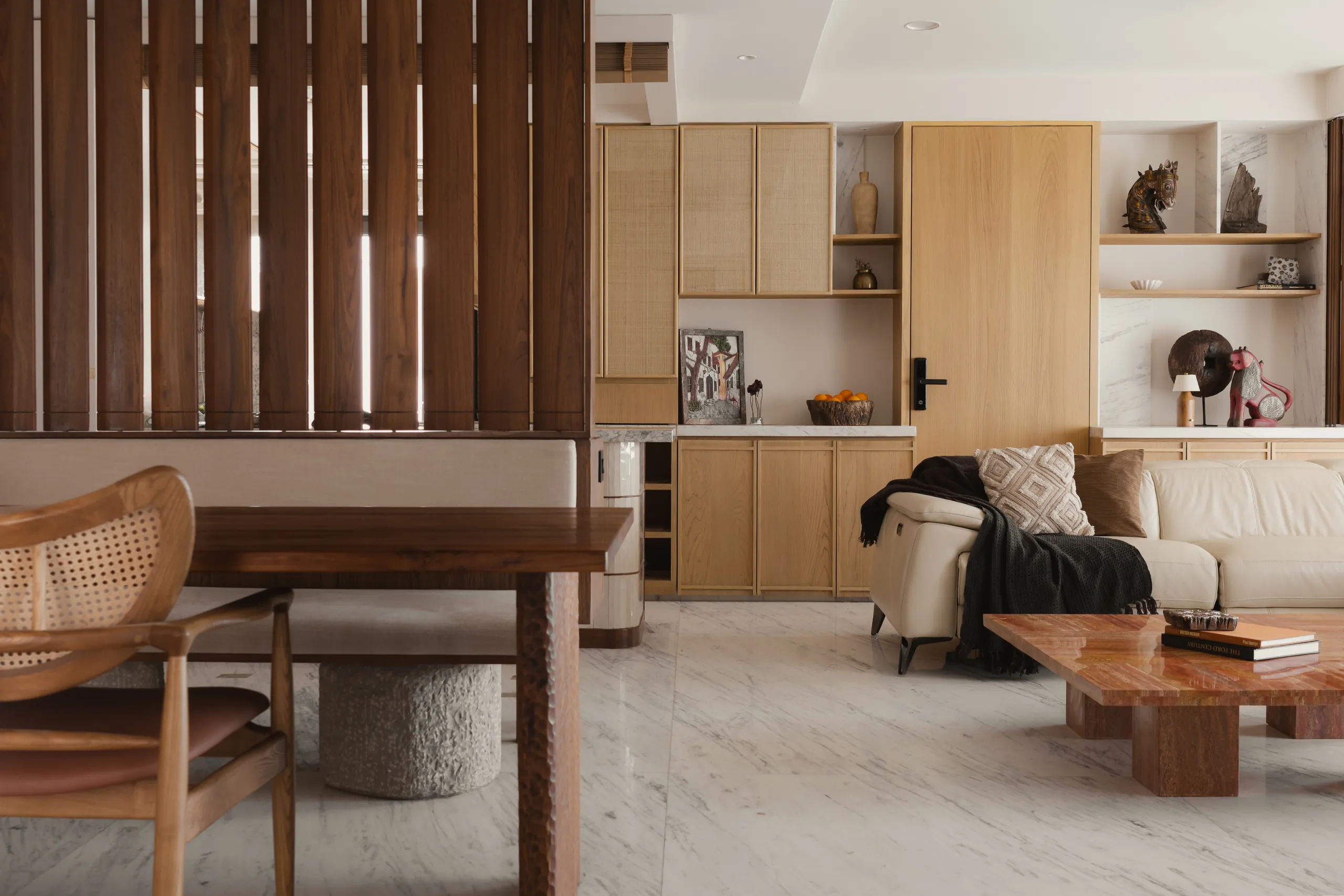
Kota stone can give a home a quiet, grounded surface. But choosing it from a small sample tells you very little about how a whole floor will look or feel. The finish, batch, laying pattern and surrounding materials all matter.
We would start with the room, rather than the stone catalogue. A bedroom floor, kitchen and bathroom ask different things of the same material. Your willingness to live with natural variation matters too.
decide what the floor needs to do
Write down how the room is used. Does it meet a balcony where rain can enter? Will children sit and play on the floor? Is this a dry living space or a wet bathroom? Each answer changes the questions to ask the supplier and installer.
For a bathroom, ask for evidence of the proposed finish's suitability when wet. A stone name alone does not establish slip performance. Drainage, cleaning and the installed finish need to be considered together.
view more than one piece
Natural stone varies. Ask to see several pieces from the proposed supply, including the ones you find less attractive. If the sample represents only the most uniform piece in a batch, it is a poor basis for approval.
Lay the samples beside your timber, paint and fabric choices. Look at them in daylight and under the lighting you plan to use. A green-grey floor can look very different beside warm timber and a cool white wall.
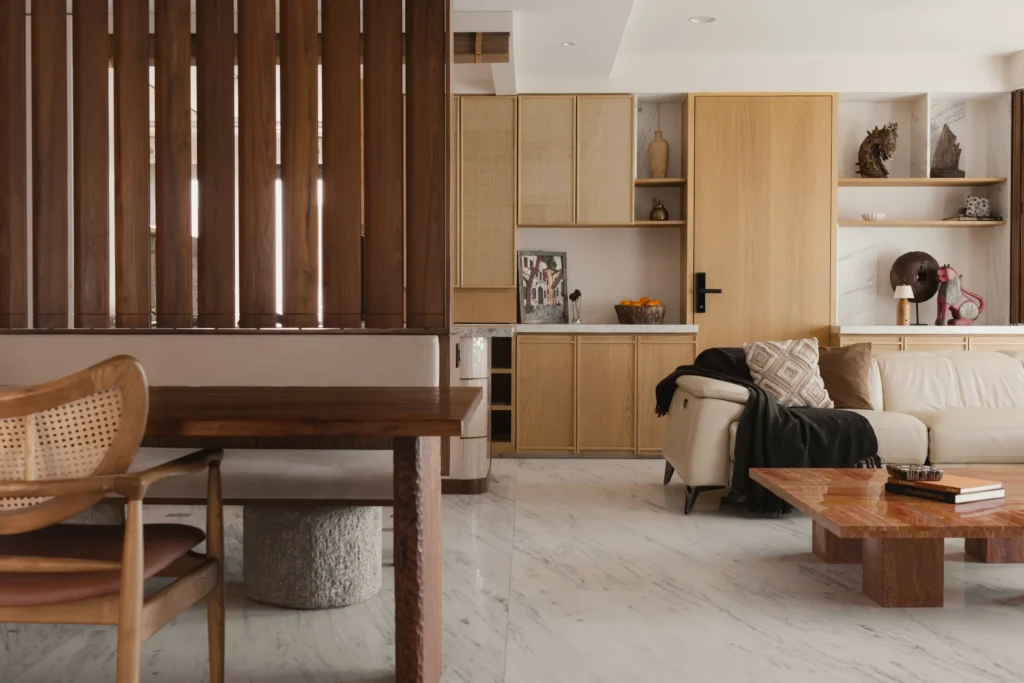
The photograph shows the broader material palette in home in•between. Its Kota stone is used in the bathrooms; this living-space image is not a photograph of a Kota floor.
agree the layout before laying
Ask for a drawing that shows joints, edges, thresholds and changes of material. Decide where cuts land at doors and fixed joinery. An awkward narrow strip can become the most noticeable part of an otherwise calm floor.
Also ask what is included in the quote: substrate preparation, laying, joint treatment, finishing, protection during other work and cleaning at handover. Comparing the stone price alone leaves much of the installed cost unexplained.
discuss maintenance honestly
Kota is limestone. The Natural Stone Institute's care guidance explains why calcium-carbonate stone needs non-acidic cleaning and why sealing is not a promise of stain-proofing.
Ask the supplier for care instructions for the exact stone and finish. Keep them with your home records, and make sure the people who clean the floor have them too. Do not assume a general bathroom cleaner is suitable.
when we would pause
We would pause if the supplier cannot explain the finish, if the sample differs substantially from the proposed batch, or if the installer treats wet and dry rooms as identical.
We would also reconsider if you want a perfectly uniform floor with no visible ageing. The sensible choice is the material you can live with, rather than the one that photographs best on installation day.
what to bring to a first discussion
Bring photographs of the room, an outline of its use, your preferred finish and a few samples of the surrounding materials. Include any concerns about cleaning or slipping. That gives us a useful starting point for choosing the stone, detailing it and comparing it with alternatives.
read next
Explore our home interiors work and the home in•between case study. For a related guide, read lime plaster walls guide.