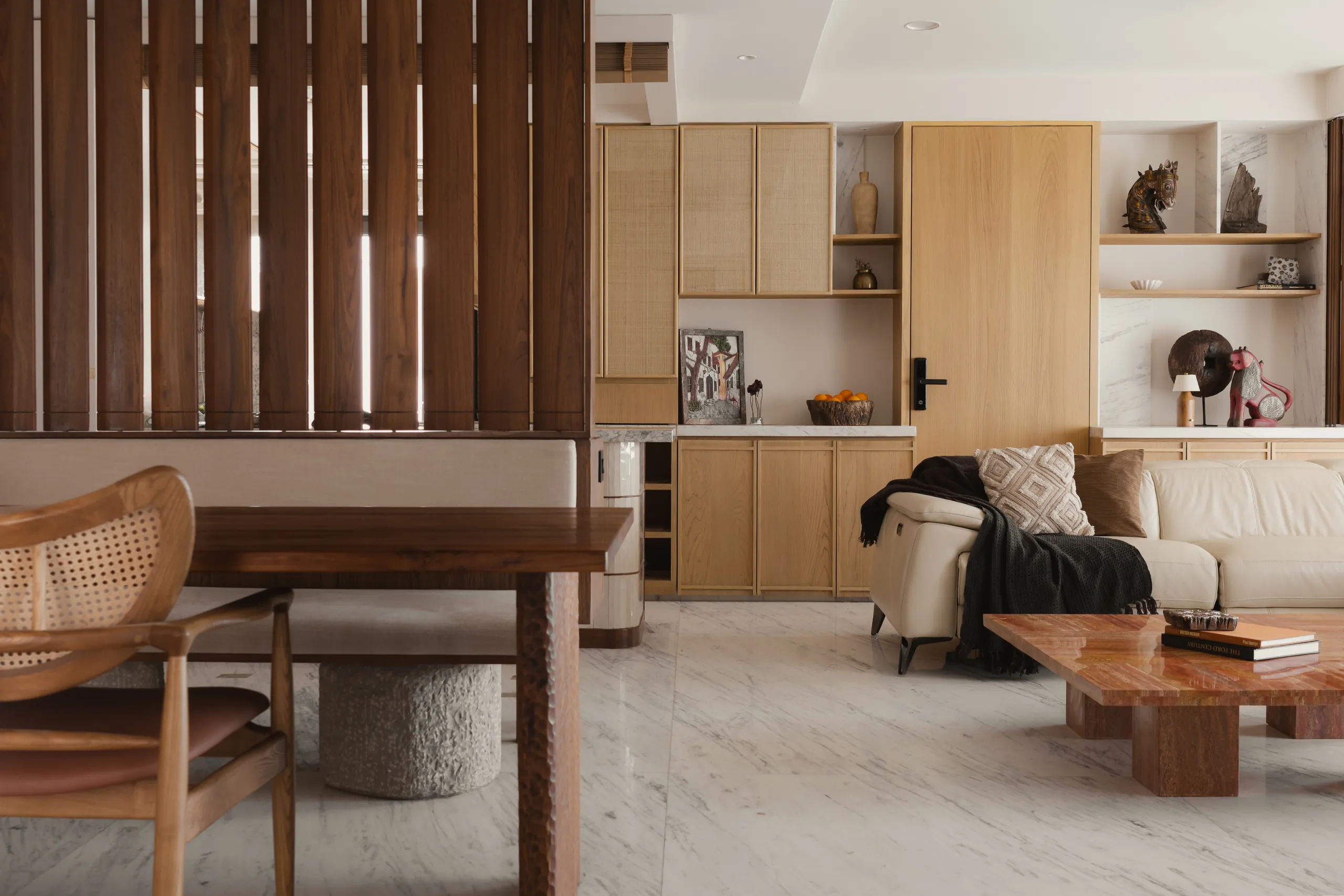
A home shared by two generations needs more than enough bedrooms. It needs places to be together without requiring everyone to do the same thing, and places to withdraw without feeling disconnected.
We start by understanding the family's routines separately. The parents' day may begin earlier. A younger couple may work from home or entertain later. Those differences should shape the plan before they become daily friction.
draw the routines before the rooms
List waking times, meals, work calls, rest, visitors and household tasks. Notice where routines overlap and where they conflict.
The dining table may need to be quiet during a work call and available for lunch soon afterwards. A television beside a sleeping area may cause a problem that no decorative partition will solve. Naming these conflicts early helps us plan honestly.
give privacy more than one layer
Privacy includes sight, sound and the ability to close a space. A screen may keep a room from view while leaving conversation audible. A sliding element may divide space without creating the acoustic separation of a wall and door.
Discuss what each person needs. We should not promise that a flexible partition solves every form of privacy.
make shared spaces easy to use
Plan seating around the people who will use it, including how they stand up, sit down and move around furniture. Keep the routes between bedrooms, bathrooms and living spaces clear.
If a family member has particular access needs, bring them into the brief. Generic labels such as “elder-friendly” do not replace understanding the actual person and involving the appropriate specialist when needed.
let a spare room have a clear second job
A guest room can also be a study or lounge, but its changeover must be manageable. Where does the bedding go? What happens to the work equipment? Can a guest sleep without moving half the room?
In home in•between, a 1,600 sq. ft. Powai apartment, flexible elements support different uses. The project is a reference for planning around a family, rather than a template to copy regardless of your routines.
divide storage by use
Shared linen, serving dishes and household supplies should be easy to find without entering someone's private room. Personal storage should be planned with each user.
Allow for the things already owned. A home for several generations often includes furniture, devotional objects, books and collections that matter more than the new finishes.
agree what is fixed and what may change
A room occupied by a parent today may become a study later. Children grow, visitors stay longer and work patterns change. Identify which elements can adapt without rebuilding services or major joinery.
Flexibility is useful only when it is easy to operate. Too many moving parts can make everyday life harder.
prepare a family brief
Ask each household member for one thing they need, one thing they want to keep and one daily irritation. Bring the answers together before deciding the style.
That gives us a better basis for a shared home than asking everyone to agree on a single set of reference pictures.
read next
Explore our home interiors work and the home in•between case study. For a related guide, read small apartment design lessons.