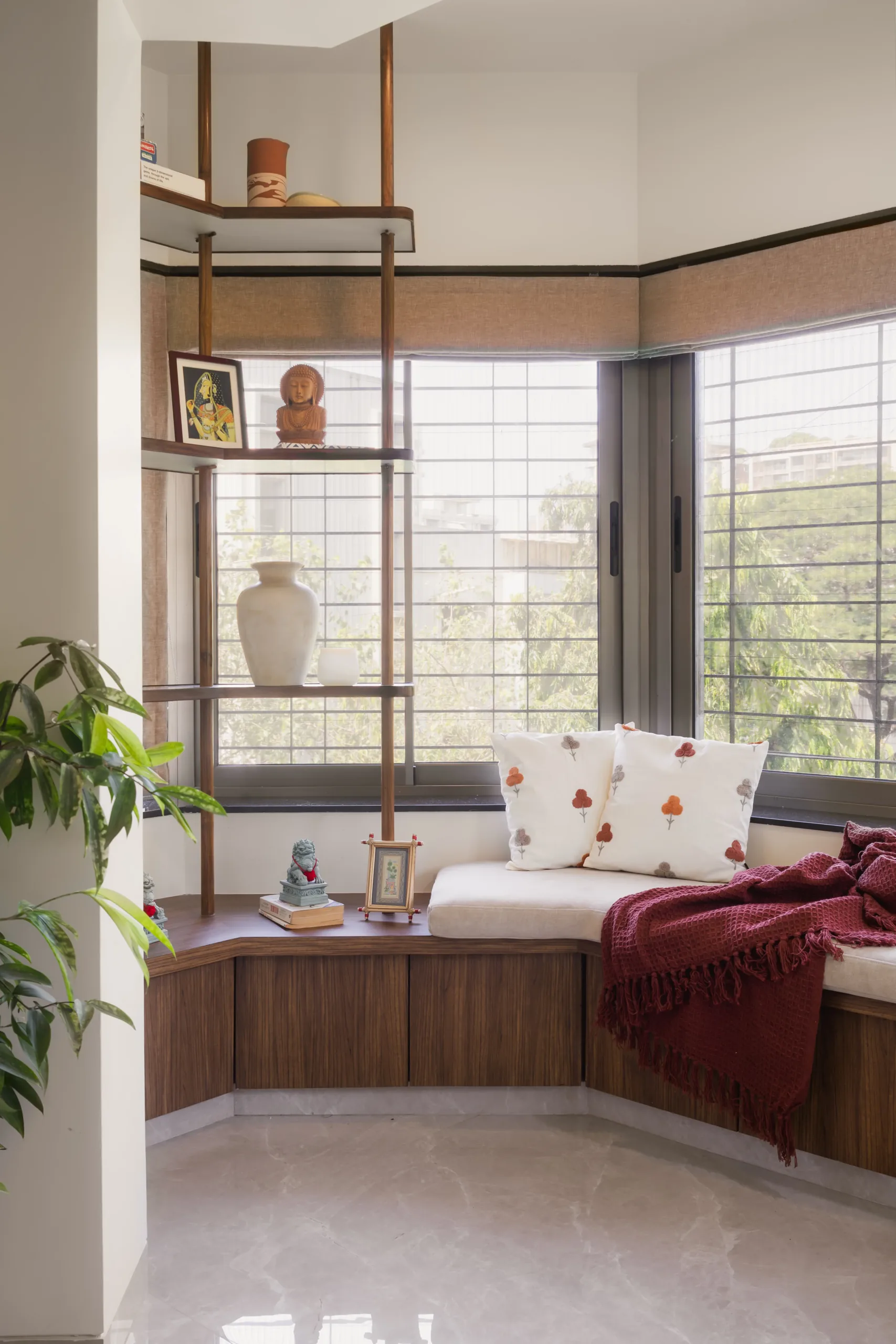
A window seat can turn an overlooked corner into somewhere you use every day. It can also become a narrow ledge that looks good in a photograph and holds cushions no one sits on.
The difference starts with a simple question: what will you do here? Reading, chatting, watching the street and accommodating a guest need different kinds of comfort.
begin with the view and the light
Sit in the intended position before deciding the joinery. Check what you can actually see. A low window does not guarantee a useful view, and a deep seat may place you too far back from it.
Notice glare and afternoon heat. Discuss the blind or curtain at the same time as the seat, including how it will operate and be cleaned.
test sitting rather than quoting a standard size
Seat height, depth and cushions should suit the people using it. A seat comfortable for reclining may be awkward for someone who needs a firm place to sit upright.
A simple mock-up can help. It lets you test feet on the floor, support at the back and how easily you can stand up. Measurements follow the use, rather than taking a favourite image as a dimensional drawing.
give storage a realistic job
If there is storage beneath, decide whether it holds daily or occasional items. Check drawers or lids with nearby furniture in place.
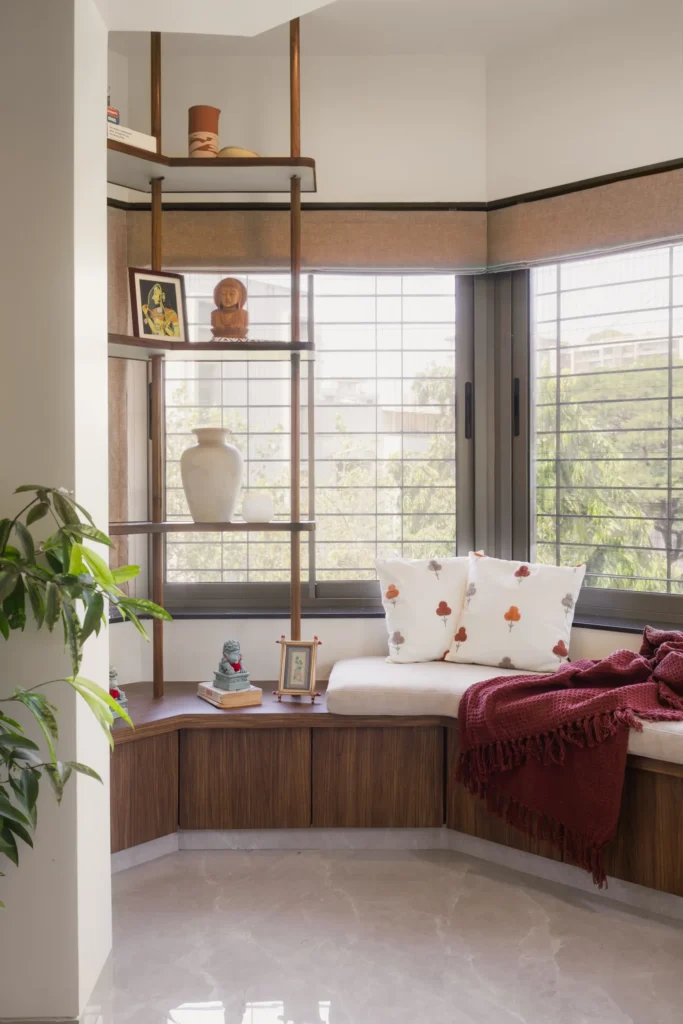
Do not claim storage that is not accessible. In the photograph of The Nest, the visible qualities are the corner seat, shelves and window. A photograph alone does not establish what is inside the joinery.
keep the window workable
The seat should not obstruct the window's movement, cleaning access or any required safety provision. Check the design against the actual opening and surrounding construction.
Avoid fixing a finish against a damp junction before the cause has been resolved. Joinery beside a window needs careful coordination with the building condition.
let the corner stay quiet
A window seat does not need several additional decorative gestures. Its role may simply be to offer a comfortable pause with a view and a place for a book.
The Nest gives us a useful reference for that kind of corner. The detail earns its place because it supports a way of using the room.
read next
Explore our home interiors work and the The Nest case study. For a related guide, read small apartment design lessons.